
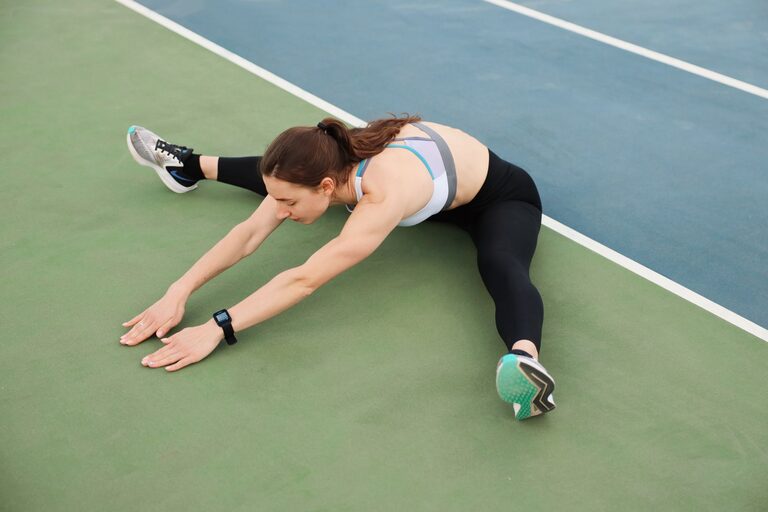
Regular stretching can help you move more comfortably and make exercise feel smoother. The most effective routine depends on when you stretch. Before exercise, focus on gentle movements that gradually prepare your muscles and joints for activity. After exercise, slower stretches can help you relax while your body is warm.
Stretching should feel controlled and comfortable. Avoid bouncing, forcing a joint into position, or holding your breath. A mild pulling sensation is normal, but stop if you feel sharp pain, numbness, or unusual discomfort.
Before Exercise: Prepare With Dynamic Stretching
Before a workout, dynamic stretching is usually a practical choice. It involves moving through a comfortable range of motion instead of holding one position for a long time. These movements increase circulation, warm the body, and prepare the muscles for the actions used during exercise.
Begin with five minutes of easy activity, such as walking, light cycling, or marching in place. Then complete the following routine. Perform each movement for 30 seconds or 6 to 10 controlled repetitions per side.
1. Arm Circles
Stand tall with your feet about hip-width apart. Extend your arms out to the sides and make small circles. Gradually make the circles larger, then reverse the direction.
Keep your shoulders relaxed and avoid shrugging. This movement gently prepares the shoulders and upper back for activities involving the arms.
2. Shoulder Rolls
Lift your shoulders toward your ears, move them back, and then lower them. Continue in a smooth circular pattern before switching directions.
Use a slow pace and keep your neck relaxed. Shoulder rolls can be especially useful before upper-body workouts or activities that involve repeated arm movement.
3. Torso Rotations
Stand with your feet slightly wider than your hips and bend your knees gently. Hold your arms in front of your chest, then rotate your upper body from side to side.
Let the movement come from your torso rather than forcing your hips or knees to twist. Keep the motion easy and controlled.
4. Hip Circles
Place your hands on your hips and make slow circles with your pelvis. Complete several circles in each direction.
Keep your chest lifted and your feet steady. Hip circles can help you transition into activities such as walking, running, dancing, or lower-body strength training.
5. Leg Swings
Stand beside a wall or sturdy surface for balance. Swing one leg forward and backward in a small, controlled motion. Keep your torso upright and gradually increase the range if it feels comfortable.
After several swings, turn to face the support and move the leg gently from side to side. Repeat on the other leg. Avoid using momentum that causes your body to twist or your leg to swing uncontrollably.
6. Walking Lunges
Step forward with one foot and lower your body until both knees are comfortably bent. Push through the front foot to stand and bring the other foot forward into the next lunge.
Keep your front knee aligned with your toes and your back straight. If walking lunges feel challenging, perform stationary lunges while holding a chair or wall for balance.
7. Bodyweight Squats
Stand with your feet about shoulder-width apart. Bend your knees and hips as if sitting into a chair, then return to standing.
Move only as low as you can while maintaining control. Keep your heels grounded and your knees tracking in the same direction as your toes. Complete 8 to 12 repetitions at an easy pace.
After Exercise: Use Gentle Static Stretches
After exercise, your muscles are warm, making it a convenient time for static stretching. Static stretches involve holding a position without movement. They can help you practice comfortable ranges of motion and finish your workout with a calm cooldown.
First, spend three to five minutes walking slowly or moving gently. Then hold each stretch for 20 to 30 seconds. Repeat once on each side when appropriate, and breathe steadily throughout.
1. Standing Calf Stretch
Place your hands on a wall. Step one foot back, keeping the heel on the floor and the toes pointed forward. Bend the front knee while keeping the back leg fairly straight.
You should feel a gentle stretch in the calf of the back leg. Move the back foot slightly closer if the stretch feels too strong.
2. Seated Hamstring Stretch
Sit on the edge of a chair with one leg extended and the heel resting on the floor. Keep your back long and lean forward slightly from your hips.
Avoid rounding your back or reaching forcefully toward your toes. The stretch should be felt along the back of the extended thigh.
3. Standing Quadriceps Stretch
Hold a wall or chair for balance. Bend one knee and bring your heel toward your hips, holding the ankle or the lower part of the leg if comfortable.
Keep your knees close together and avoid arching your lower back. If reaching your foot is difficult, place the top of that foot on a low, stable surface instead.
4. Hip Flexor Stretch
Kneel on one knee with the other foot in front. Keep both knees comfortably bent and gently shift your hips forward while maintaining an upright torso.
Tuck your pelvis slightly rather than arching your back. You should feel the stretch near the front of the hip on the kneeling side.
5. Figure Four Stretch
Sit on a chair or lie on your back. Place one ankle over the opposite thigh, creating a figure four shape. If seated, lean forward slightly. If lying down, draw the supporting leg toward you.
Keep the movement gentle and stop before the hip feels pinched or strained. Repeat on the other side.
6. Chest and Shoulder Stretch
Stand near a doorway and place one forearm against the frame. Step forward slightly until you feel a gentle stretch across your chest and the front of your shoulder.
Keep your shoulder lower than your ear. Turn your body only enough to create a comfortable stretch, then switch sides.
How to Build a Simple Routine
A stretching routine does not need to be long to be useful. Try this basic structure:
– Before exercise: five minutes of easy activity followed by five to eight minutes of dynamic movements.
– After exercise: three to five minutes of easy movement followed by five to ten minutes of static stretches.
– For flexibility practice: add a separate 10- to 15-minute session several times per week when your body is warm.
Choose stretches that relate to your activity. For example, include leg swings and hip movements before a run, or shoulder circles and torso rotations before an upper-body workout. Use a smaller range of motion at first and gradually make movements larger as your body warms.
Stretching Tips for Better Results
Consistency matters more than intensity. Practicing comfortable stretches regularly is generally more useful than pushing hard once in a while. Keep these points in mind:
– Breathe slowly instead of holding your breath.
– Move with control and avoid bouncing.
– Keep your joints in comfortable positions.
– Use a wall, chair, or other stable support when needed.
– Stop if you notice sharp pain, tingling, numbness, or loss of control.
– Give your body extra time to warm up in cool conditions.
– Adjust the routine to your fitness level and the demands of your activity.
Stretching works best as one part of a complete movement routine. Pair it with a gradual warm-up, regular strength work, balanced activity, and enough rest. Over time, these habits can help you move with greater ease and confidence before and after exercise.